Control, Not Hiding
Repositioning a precision manufacturer's website so buyers trust its overseas production instead of fearing it.
redstonemanufacturing.com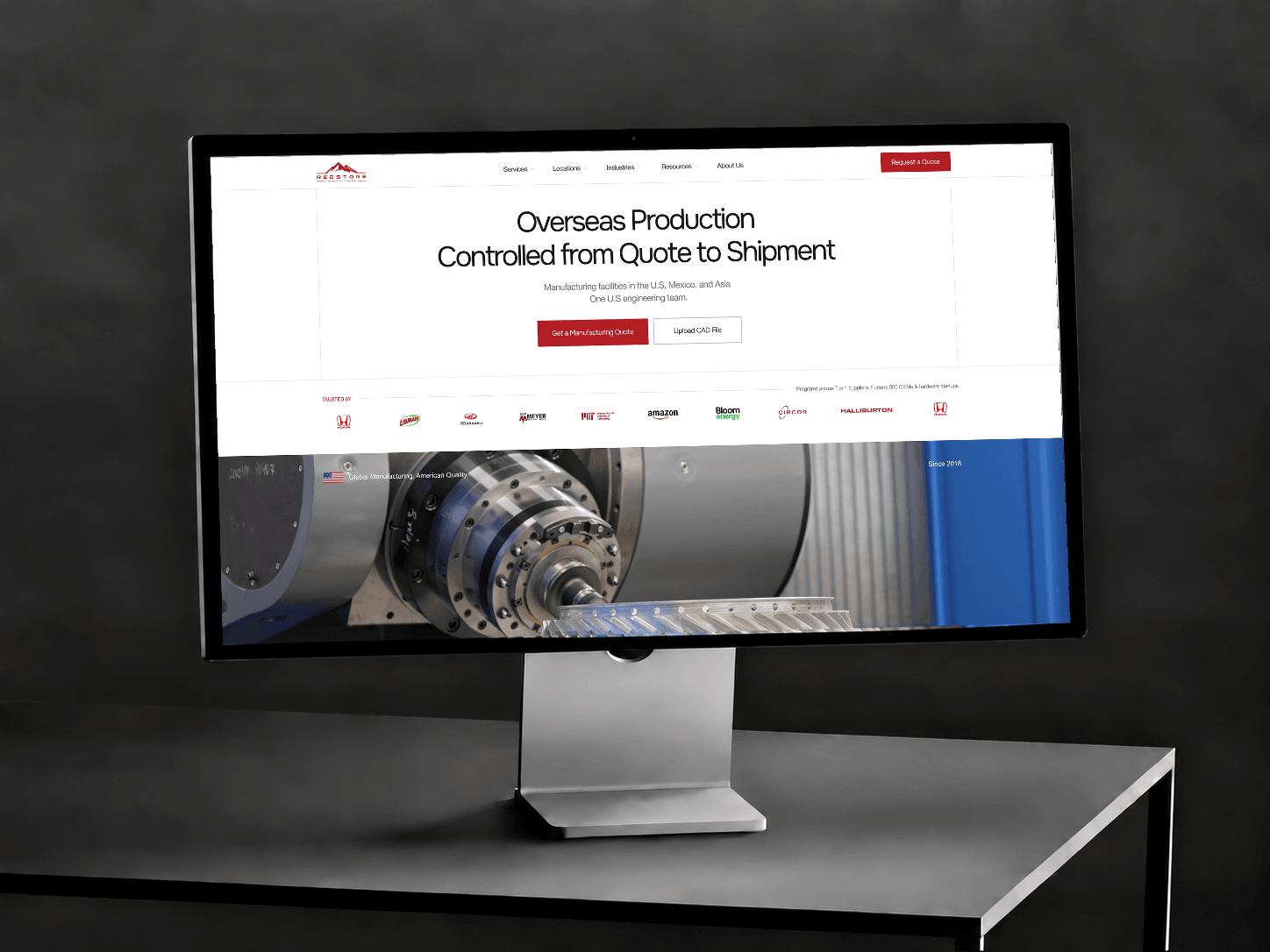
Role
UX Research
UX/UI Design
CRO
Timeline
3 months
March – May 2026
Team
1 CTO
1 PM
3 Devs
Problem
Low prices, no proof
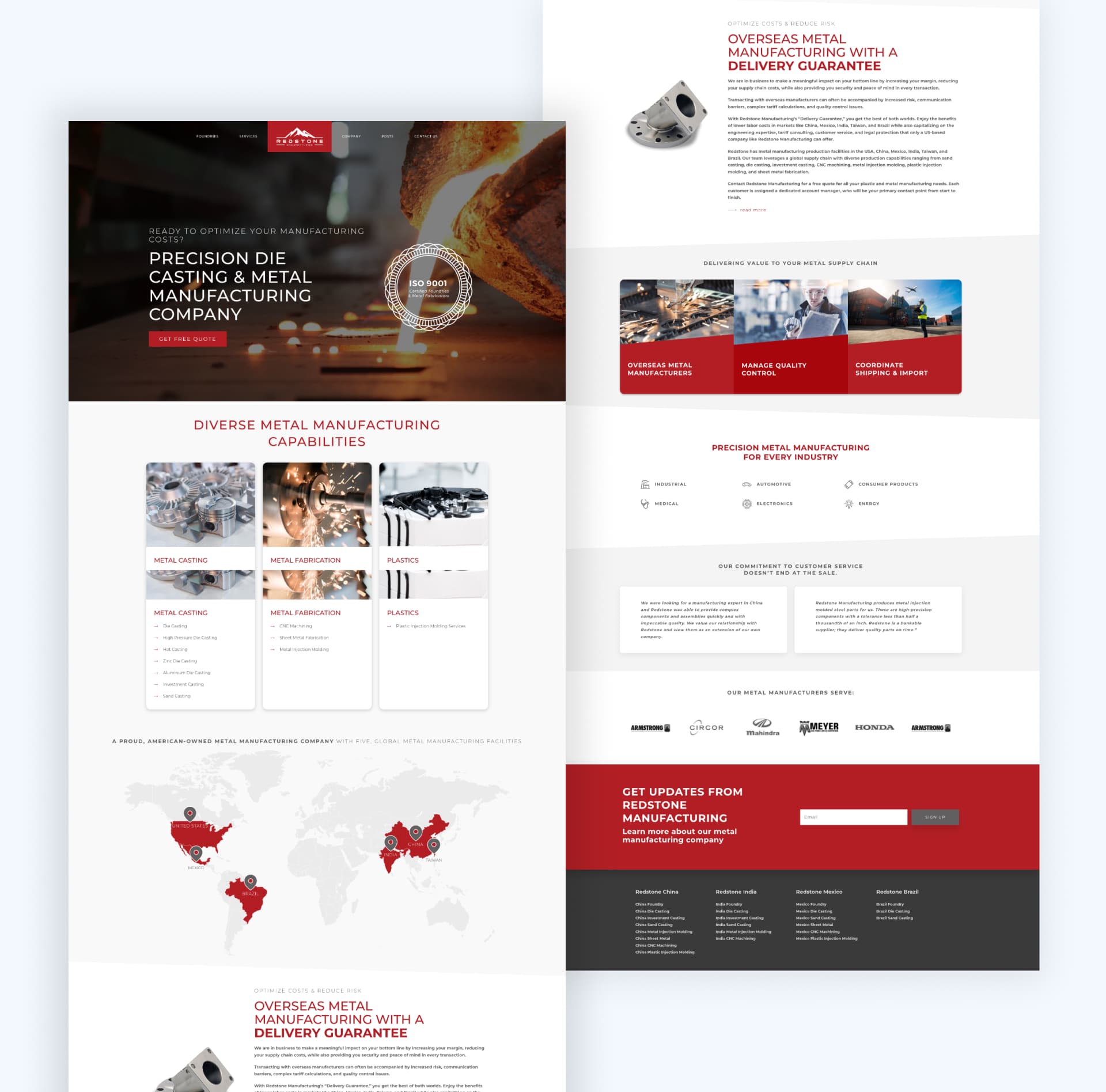
In stakeholder interviews and deal reviews, the same story kept coming up. A procurement manager lands on Redstone's homepage. The manufacturing looked cost-competitive. There's no factory, no names, no sign of who actually makes the parts. So she fills in the gap herself: cheap plus anonymous means broker. She closes the tab.
Redstone owns and runs facilities in the United States, Mexico, China, and India. The site never said so. Most visitors left before reaching the quote form: 64% bounced from the homepage, and only 1.2% clicked to request a quote.
Insight
The silence was the problem
The overseas footprint wasn't the liability. The silence about it was.
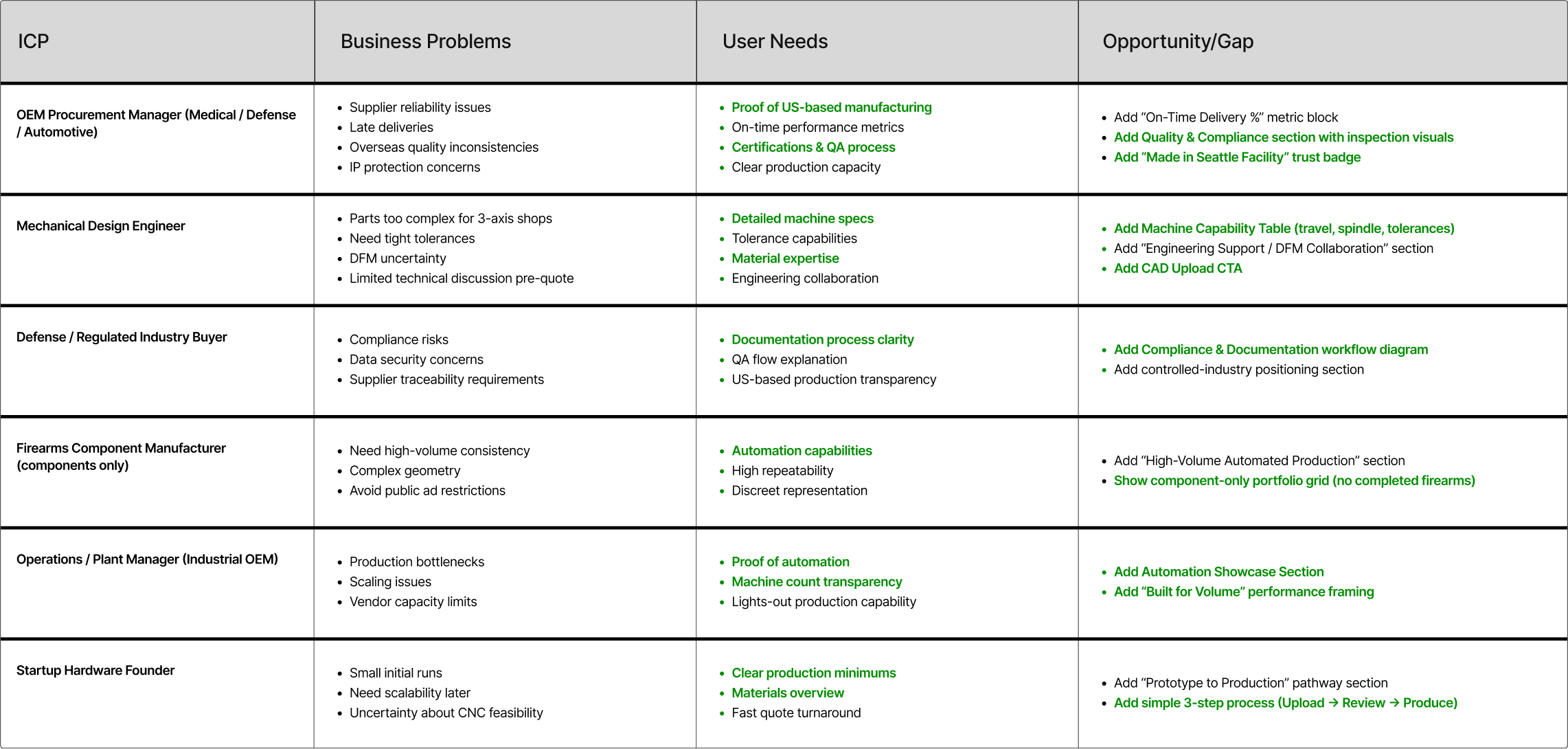
The brief asked for a homepage that looked like a domestic, owned facility. I pushed back. Buyers price in tariff and quality risk anyway, so hiding it read as evasive, not reassuring. Six buyer types kept surfacing, from OEM procurement managers to startup hardware founders, and they all needed the same thing: proof of control, not a claim of it.
The Process
Two variants, one decision
The design question was what buyers should see first. I built two new homepage variants and changed the order of the proof and capabilities to make that decision testable.
Variant 1 / Services first
Services and capabilities appeared earlier, giving buyers a faster path into what Redstone could make.
Variant 2 / Proof first
Manufacturing proof and credibility appeared earlier, giving buyers evidence of control before capability details.
The Deciding Test
Data, not a stakeholder vote
The team disagreed on page order, so I set up an A/B test instead of picking a favorite. Both variants were new designs, compared with real buyer traffic split 50/50 across 1,000+ visitors.
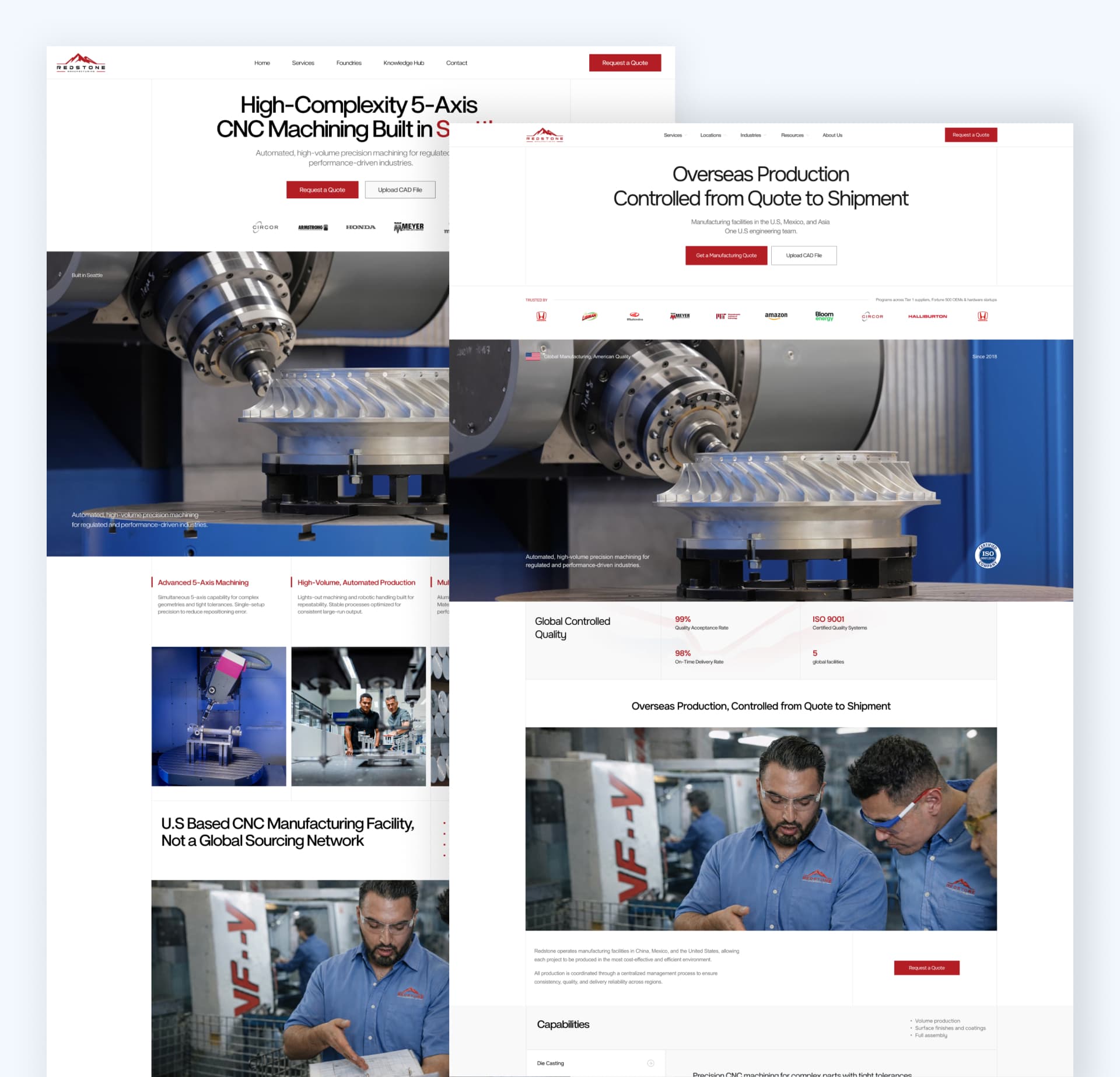
Variant 2 won and shipped: 71% more quote clicks and 80% more qualified quote submissions than Variant 1.
The Solution
Proof before capabilities
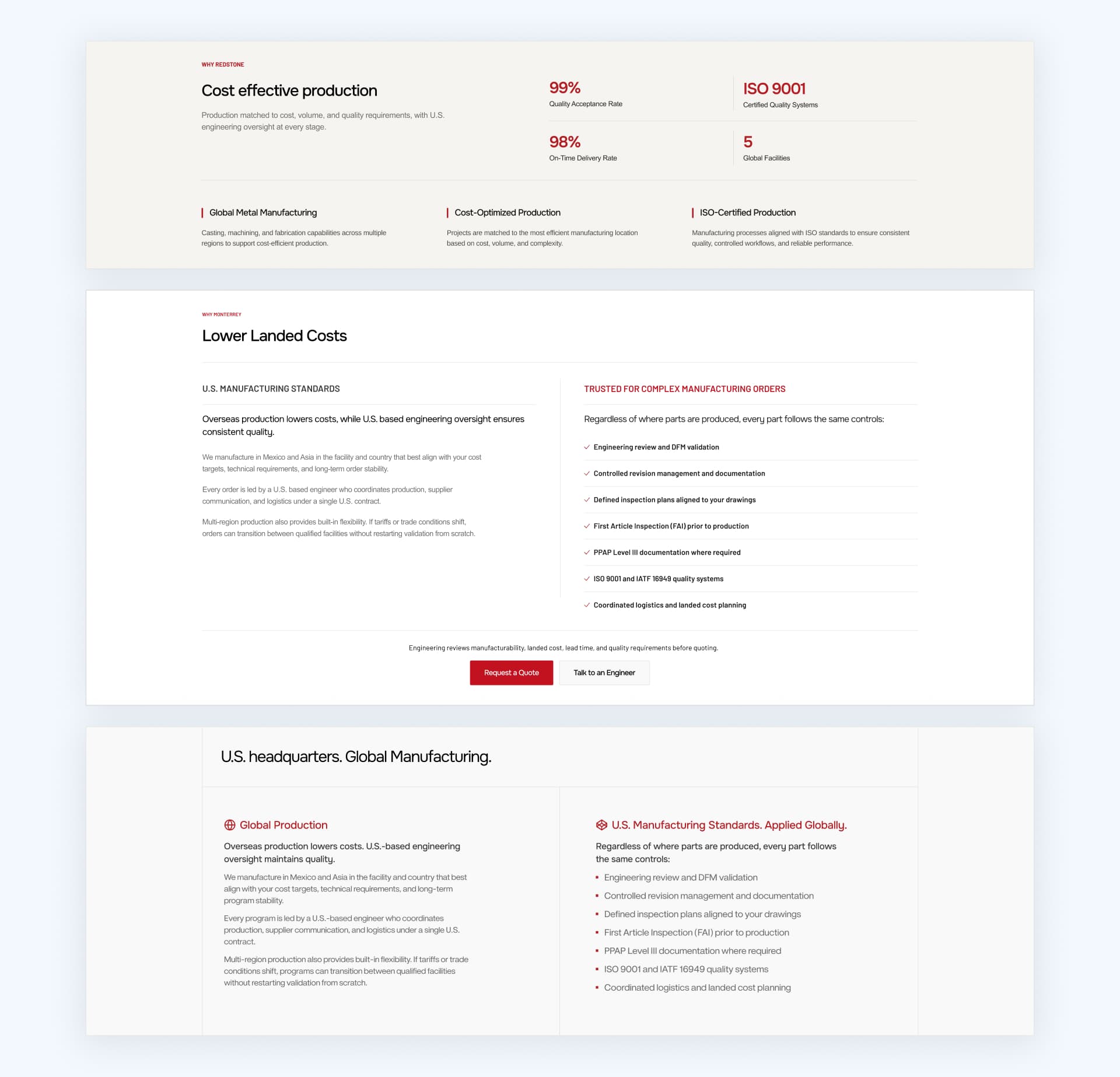
We rebuilt the page around how buyers actually decide: clarity, then proof, then cost, then the ask.
Say who's in control.
The hero states what Redstone makes and leads with control: "Overseas Production. Controlled from Quote to Shipment." Backed by a real production photo and customer logos.
Prove it immediately.
Quality, on-time delivery, ISO certification, and global facilities appear right after the hero, before any capability details.
Make cost feel smart, not risky.
A two-column section pairs the multi-region cost case with the proof behind it: a named U.S. engineer of record, PPAP documentation, and ISO/IATF systems.
Ask last.
The quote request comes after proof, process, and industry fit, when buyers are ready.
How It Scales
One logic, every entry point
Buyers enter through different needs: a specific service, an industry, or a location where that service is available. I extended the proof-first approach across these service pages, adapting the content to each entry point.
Service type: Organized around the manufacturing service the buyer needs.
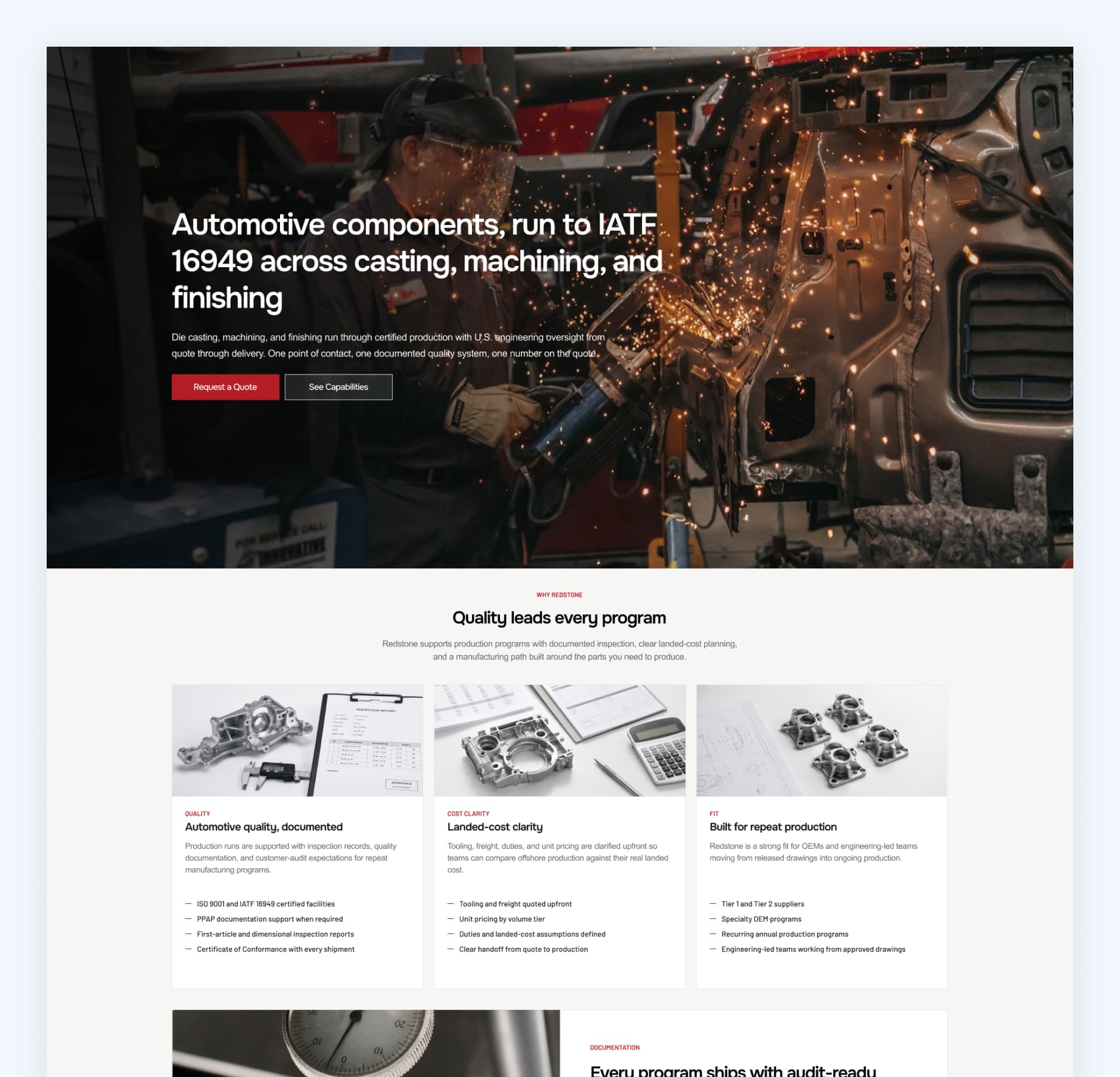
Industry: Organized around the industry the buyer operates in.View Page
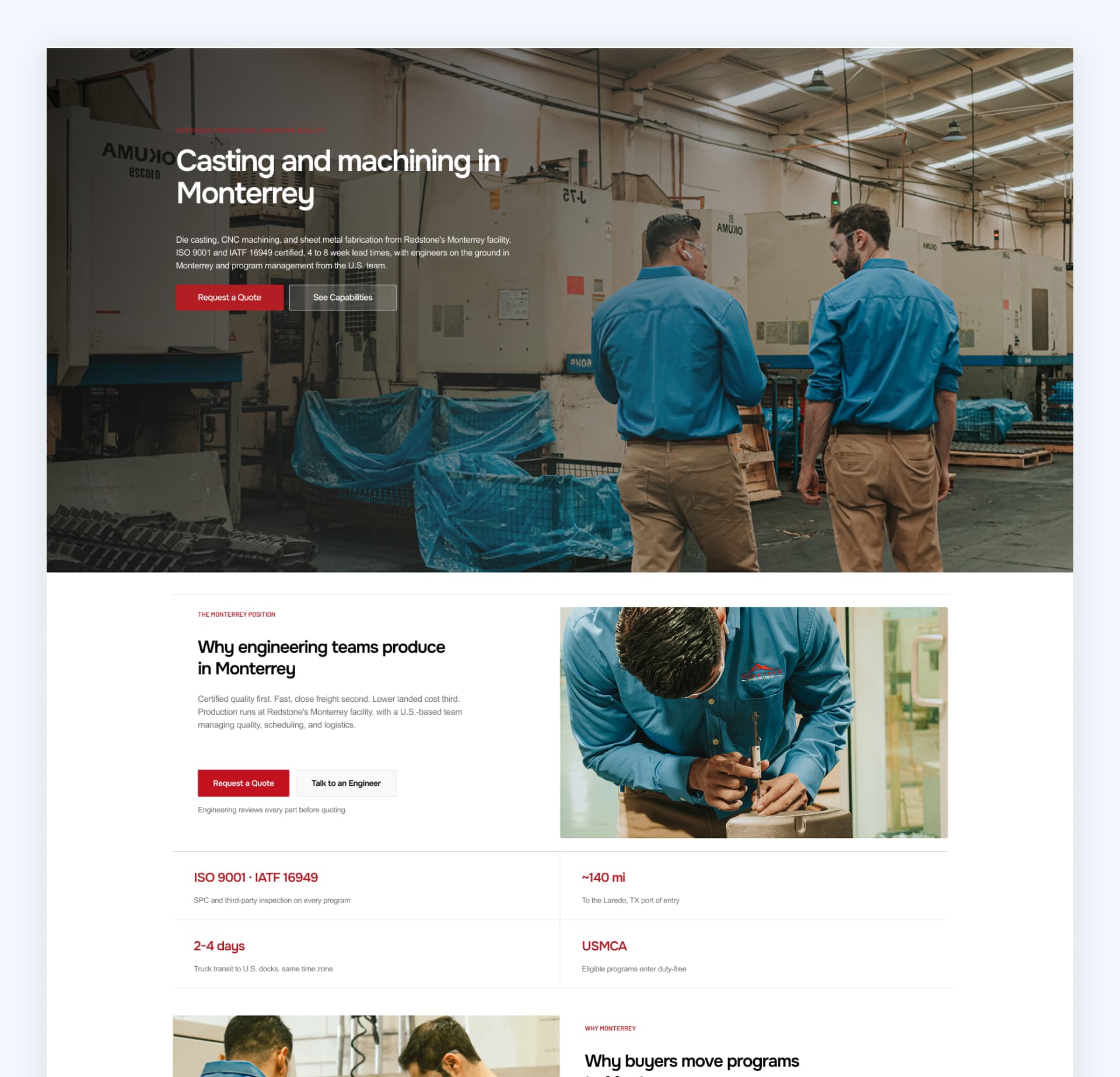
GEO location: Organized around where the manufacturing services are provided.View Page
Looking Ahead
Impact & conclusion
What I'd carry forward: Buyers don't need to be told a supplier is reliable. They need to see it, before they'll believe anything else on the page.
Want the full case study?
Research framework, six buyer profiles, section-by-section redesign, full A/B data, and business impact. 8 min read.